
Nogle studier tillader ikke e-bøger til eksamen. Tjek med din underviser, inden du vælger e-bog frem for fysisk bog.
Bemærk venligst, at den normale 14 dages fortrydelsesret ophører ved modtagelse af adgang til e-bogen.
Bemærk venligst, at den normale 14 dages fortrydelsesret ophører ved modtagelse af adgang til e-bogen.
Produktbeskrivelse
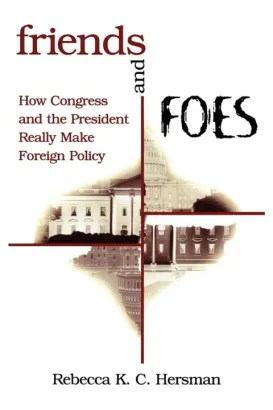
Foreign policy in the postcold war era is profoundly complex, and so too are the institutions that share the responsibility to guide and manage America's relations with other countries. Policymakers struggle within porous and fragmented institutions, in which policy is driven more powerfully by clusters of like-minded individuals than by disciplined organizations. The nation's political parties face deep divisions over foreign policy and are unable to forge a coherent vision for the future. Congress is increasingly polarized along ideological lines, while traditional internationalist foreign policy spans a truncated political center. Few aspects of U.S. politics are more contentious or controversial than the respective roles of Congress and the executive branch in formulating foreign policy. In this complex environment, scholars, pundits, and policymakers look to the public and high-profile battles between Congress and the president as a bellwether of the future of U.S. foreign policy.In reality, foreign policy is often shaped, debated, and made out of public view. In Friends and Foes, Rebecca K. C. Hersman shifts the focus away from headline-grabbing events and disagreements to the day-to-day interactions that form the backbone of policymaking.Hersman illustrates the ebb and flow of foreign policy development through many examples and anecdotes. She also includes three in-depth case studies from the mid-1990s: the controversial transfer of three U.S. warships to Turkey; the dispute over relaxing sanctions against Pakistan because of concerns about that nation's nuclear proliferation record, and the 199597 battle over the Chemical Weapons Convention. The book also illuminates the role of the media in influencing the outcome of foreign policy decisionmaking. Countering the conventional wisdom that a president and a Congress of the same political party are best able to ""get things done,"" Friends and Foes sheds new light on the institutional dynamics, conflicts, and issue loyalties that affect the development of U.S. foreign policy.
Tilgængeligheds information
Vælg variant af e-bog i højre side, for at se tilgængelighedsoplysninger.
Detaljer
- ISBN13 9780815745464
- Udgivet 2012
- Forlag Brookings Institution Press
- Format Elektronisk medie
- Udgave 1
- Sprog Engelsk