
Bemærk venligst, at den normale 14 dages fortrydelsesret ophører ved modtagelse af adgang til e-bogen.
Produktbeskrivelse
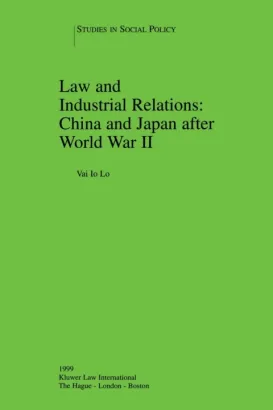
Chinese and Japanese trade unions may seem emasculated and weak when compared with their Western counterparts in that they do not stand up to management to protect the interests of workers. The author's careful analysis probes the reasons for this difference, tearing down stereotypical notions about societies with a Confucian heritage, to examine the significant role of law in shaping industrial relations in modern China and Japan.
Through a comparative analysis of their trade union laws, this work analyses the role of law in shaping postwar industrial relations in China and Japan and the interplay amongst such elements as the State or the Party, management, and workers.
The work focuses on industrial relations in commercial and industrial enterprises, addressing such issues as the performance or nonperformance of trade unions in China and Japan and possible explanations, and the prospects and limitations of using codified laws to effect change or control in the postwar industrial settings of these two countries.
The work's helpful features include a comparative approach, the use of case studies to maximize objectivity and insight, a unified and clearly expressed thesis and conclusions including a summary of findings, footnotes and cross references, an index, and concise explanations of the relevant legal provisions and the manner in which they have been applied.
Tilgængeligheds information
Detaljer
- ISBN13 9789041180834
- Udgivet 1997
- Forlag Kluwer Law International B.V
- Format Elektronisk medie
- Sprog Engelsk